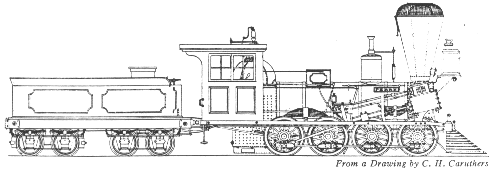
Six-coupled Switching
Locomotive, built by The Baldwin Locomotive Works
Cylinders, 15" x 18". Drivers,
diam., 44". Weight, total, about 55,000 lb.
Two engines of this
class built in 1863.
Six-coupled Switching
Locomotive, built by The Baldwin Locomotive Works
Cylinders, 15" x 18". Drivers,
diam., 44". Weight, total, about 55,000 lb.
Two engines of this
class built in 1863.
|
cost of engine repairs
due to the substitution of coal for wood. The report of the test stated
that it was wise to "assume as a basis of our calculation that one pound
of Pittsburgh coal is equivalent in heating value to 2.31 pounds of hard
wood, and that one net ton of coal is equal to 11/3
cords of hard wood." The relative cost of coal
and wood as fuel was determined for the different divisions of the road.
and the practicability of burning coal in passenger service was fully demonstrated.
Engine 156 is shown in an illustration on page 17.
In the efforts to burn bituminous |